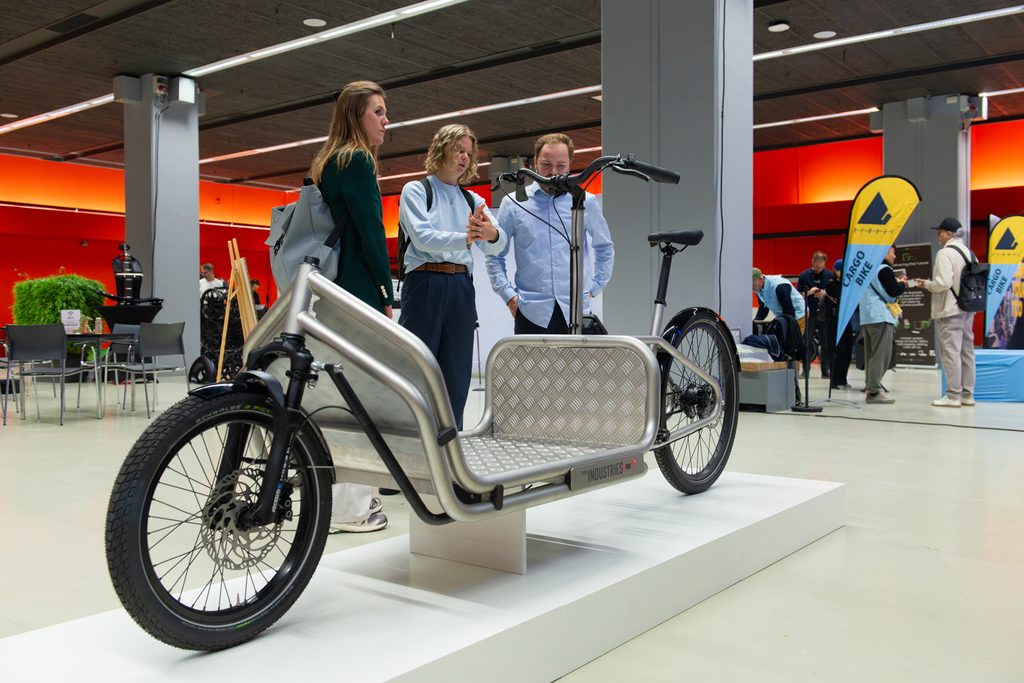
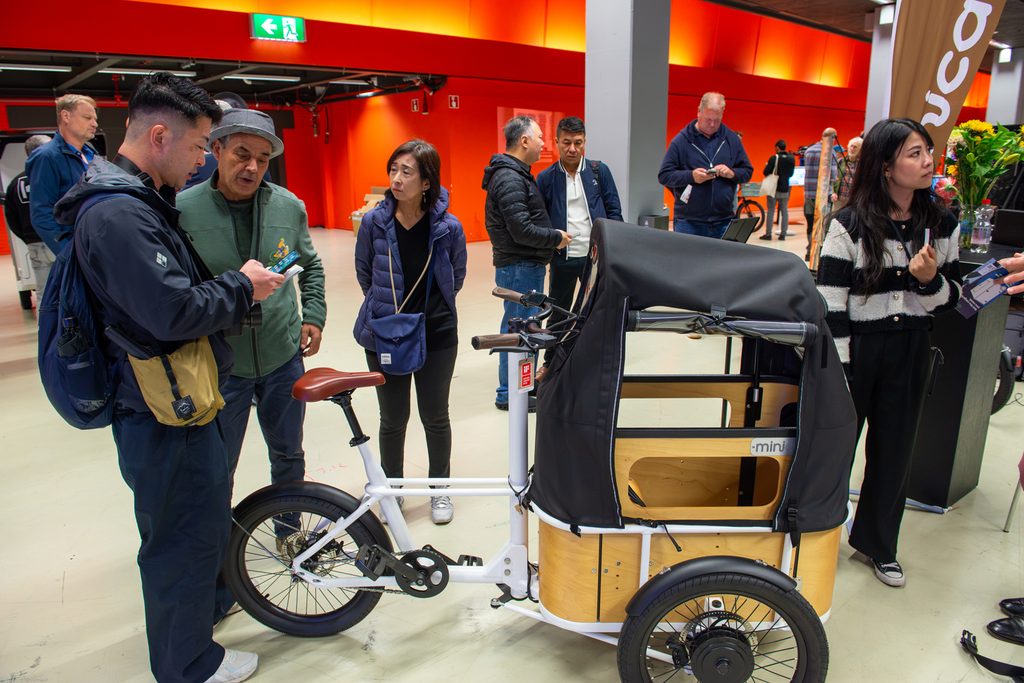
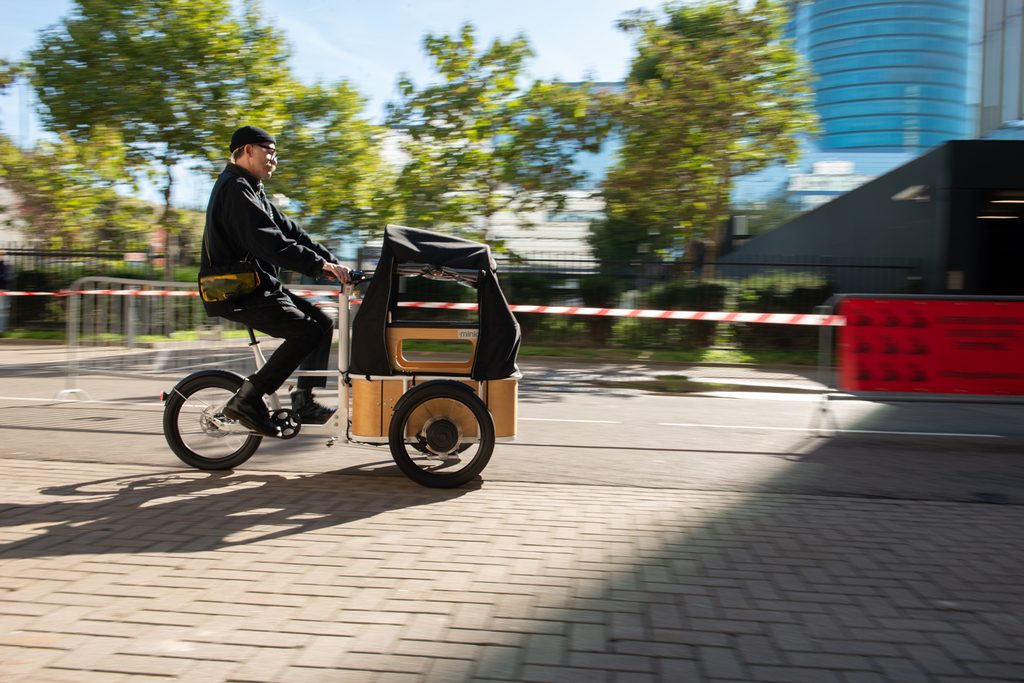
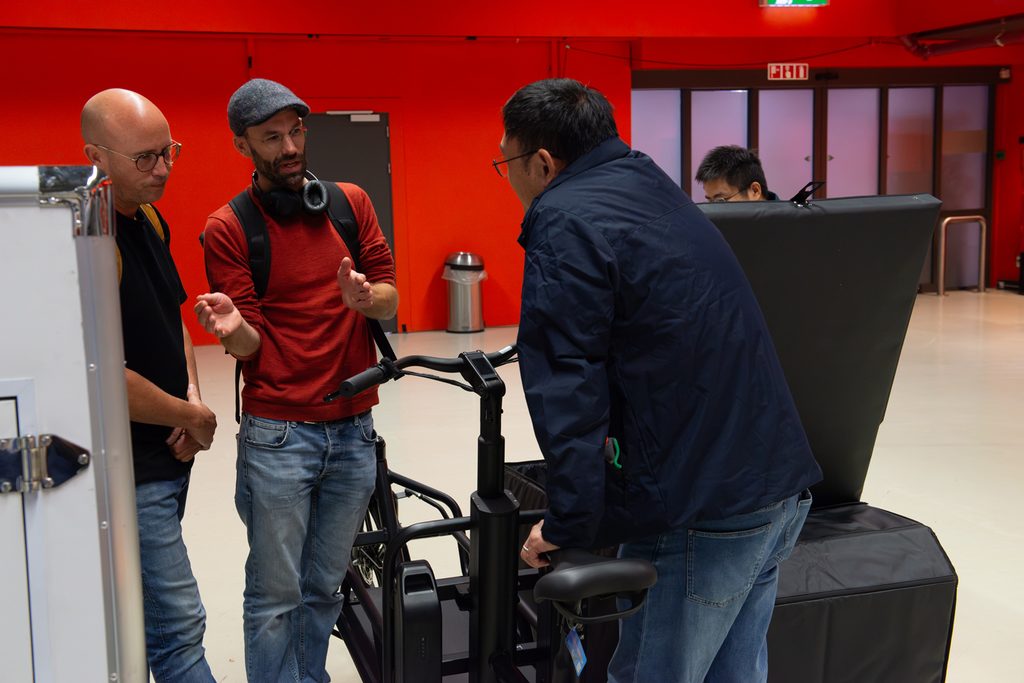
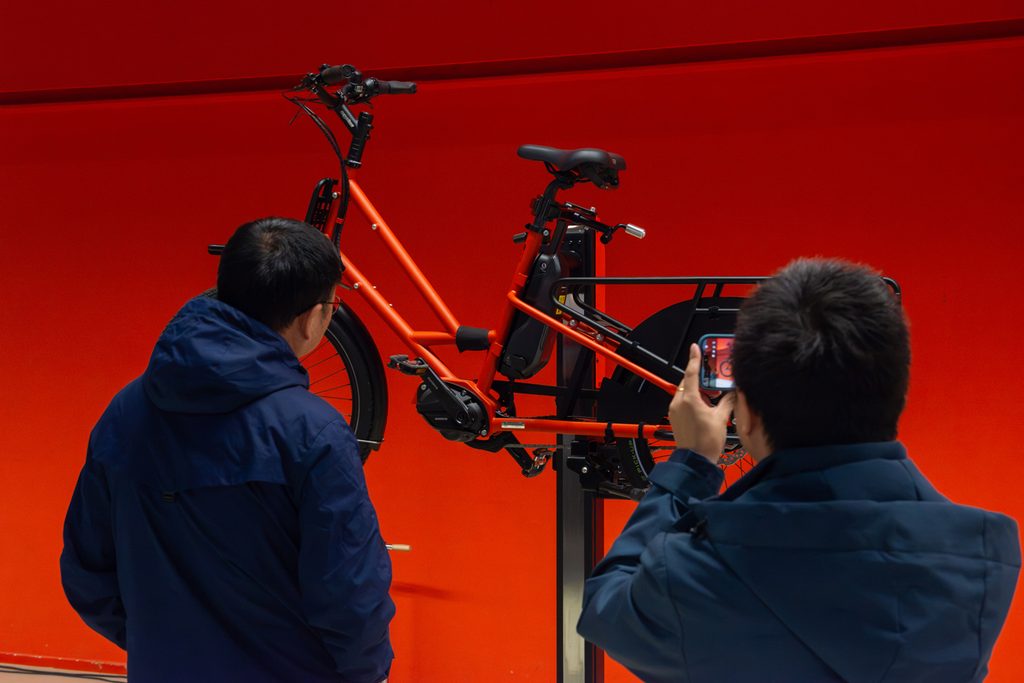
We visited the International Cargo Bike Festival held in Utrecht (Netherlands) on October 12 and 13. After speaking with many of the exhibiting brands, we drew a clear common conclusion: there is a major barrier to purchasing cargo bikes, and that is storage. And that, of course, is one of our specialties.
The International Cargo Bike Festival has been held since 2012 and is probably the most exciting venue for discovering the solutions cargo bikes can offer across all their potential fields—family, cycle logistics, rural mobility, and beyond.
We still view cargo bikes simply as bicycles. That is likely why we expect the same experience when searching for a place to park.
The capabilities of these bicycles (and their proven efficiency in all these use cases) are truly immense. Most people who have acquired one admit to having stopped using their car, and in quite a few cases, even selling it altogether. Their potential to transform how we move around cities is overwhelming.
Yet, these same potential users share a recurring question: «Where do I park this bike?» They are larger than standard bicycles and carry a higher price tag. It is striking that this size and cost present no issue when buying a scooter, a motorcycle, or a car. The explanation may be more psychological than logistical: we still view cargo bikes simply as bicycles. That is how we segment them in our minds, which is likely why we expect a similar experience when it comes to parking and pricing.
The potential solutions
The reality of cargo bikes is that they are fundamentally a different kind of vehicle. We need to approach them as a new category altogether. Despite having handlebars, a saddle, and pedals—and despite having been around for more than a century—their unique nature warrants placing them in a new segment, at least from a psychological standpoint.
Rather than trying to shift mindsets or change how we perceive cargo bikes, the industry seems to have taken another route: making them as compact or easy to store as possible.
There is a major barrier holding back the sale of cargo bikes in Europe: storage. And that happens to be one of Don Cicleto’s core specialties.
At the International Cargo Bike Festival, we met companies from around the world that have developed highly original solutions to minimize the footprint of cargo bikes when parked. The innovations on display ranged from modular teardown designs (removable cargo areas, wheels, pedals, and handlebars) to clever quick-fold mechanisms. However, these remain far from efficient everyday solutions for most current models in operation.
Don Cicleto’s Bike Hangars
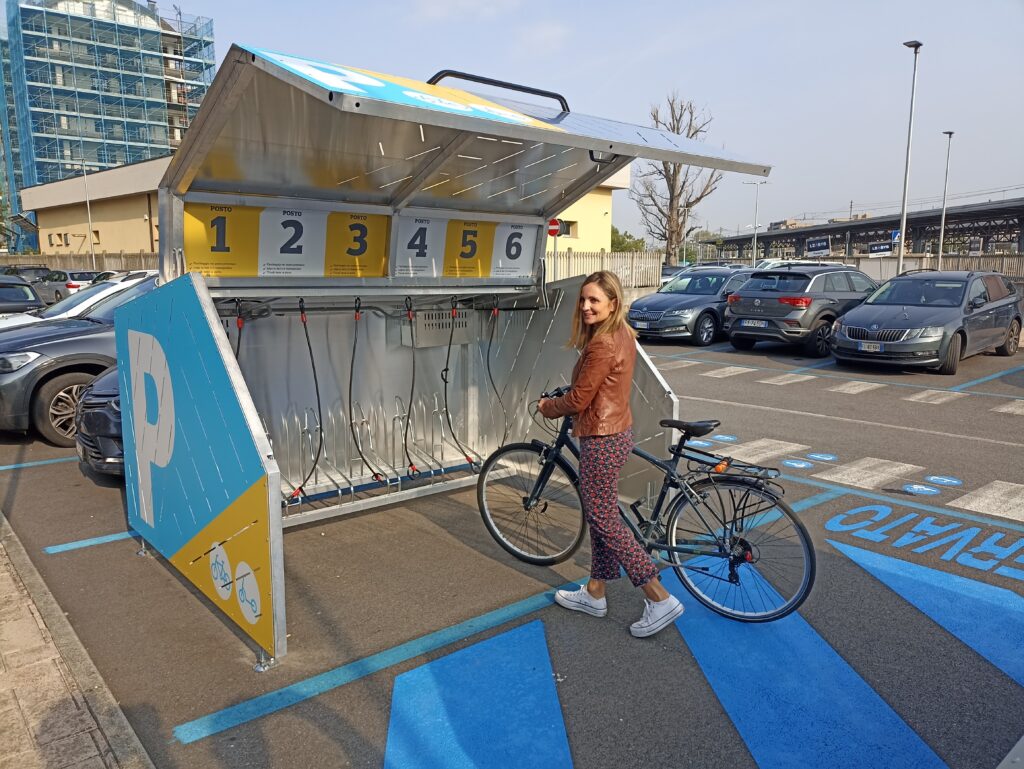
Within Don Cicleto’s portfolio of secure bicycle parking solutions, our Rocket bike hangar fits this challenge perfectly, providing the exact answers cargo bike users need.
Modular, autonomously operated via app, and featuring remote opening, the Rocket bike hangar can adapt to various cargo bike lengths—both front-loaders and rear-loading «longtails»—without taking up additional space on public streets.
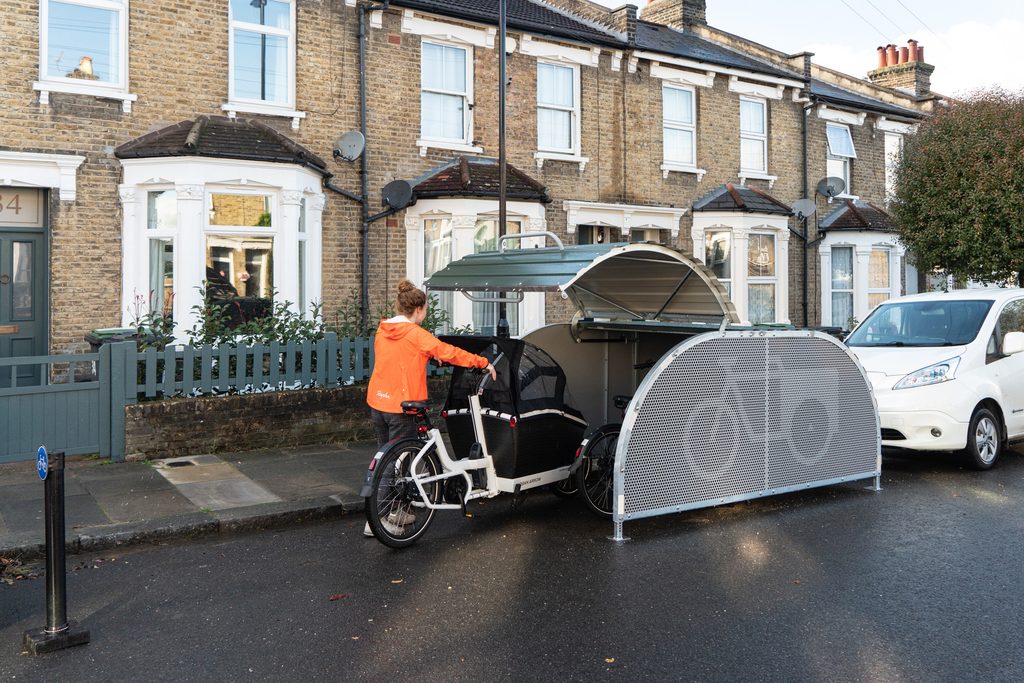
Similarly, Cyclehoop, a company we work with closely, has developed a comparable concept. In the footprint required by a single parked car, Cyclehoop’s hangar securely stores two cargo bikes with autonomous access.
A cargo bike shouldn’t need to be disassembled to be stored; it simply needs its own dedicated, smart space in the city.
Perhaps a cargo bike simply needs its own dedicated place in the city—a reliable, adaptable space that addresses the specific needs of current and future cargo bike users.
Once again, Don Cicleto demonstrates its ability to adapt, driving efficiency and making cycling easier for all riders, including those yet to come.